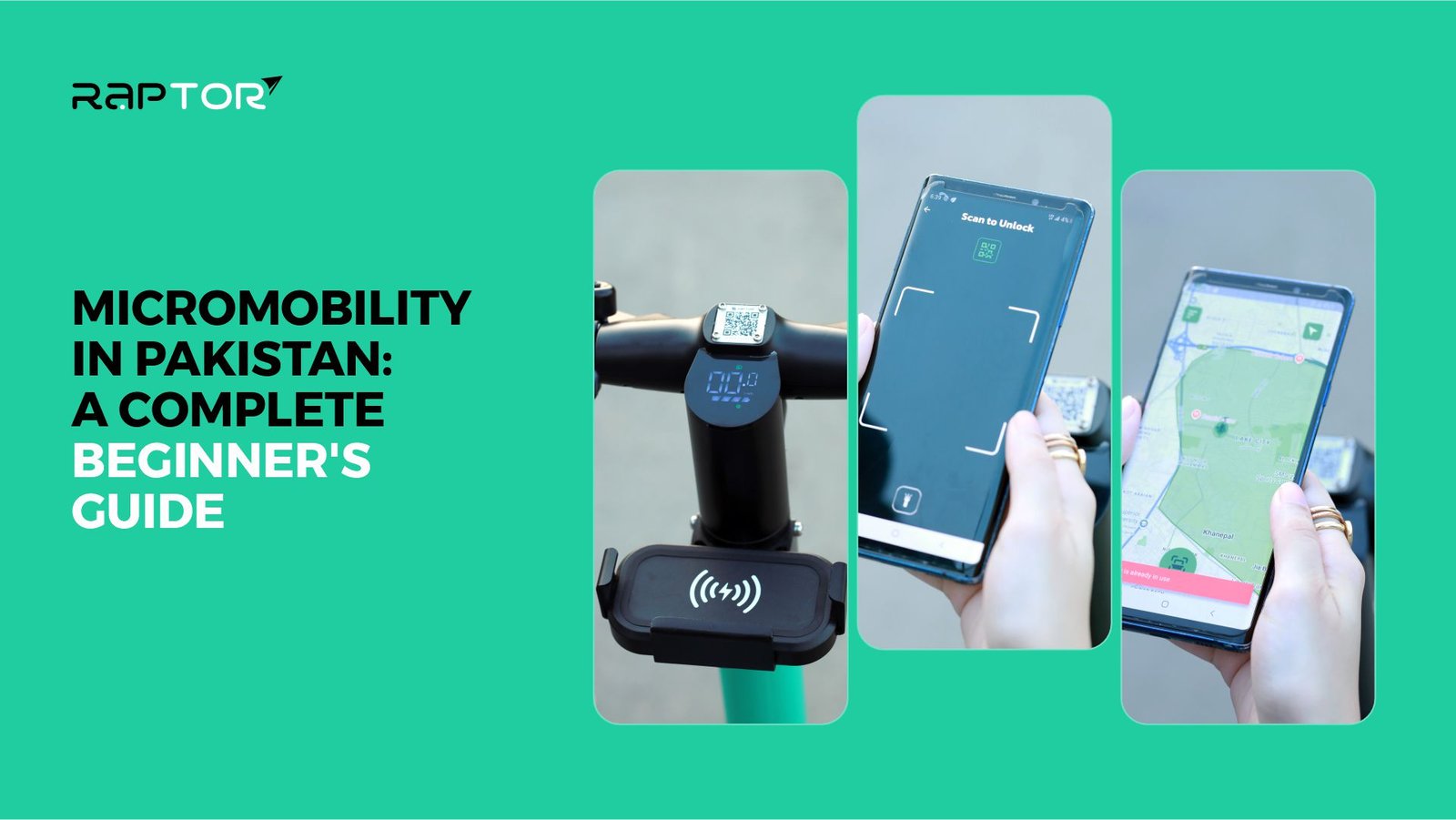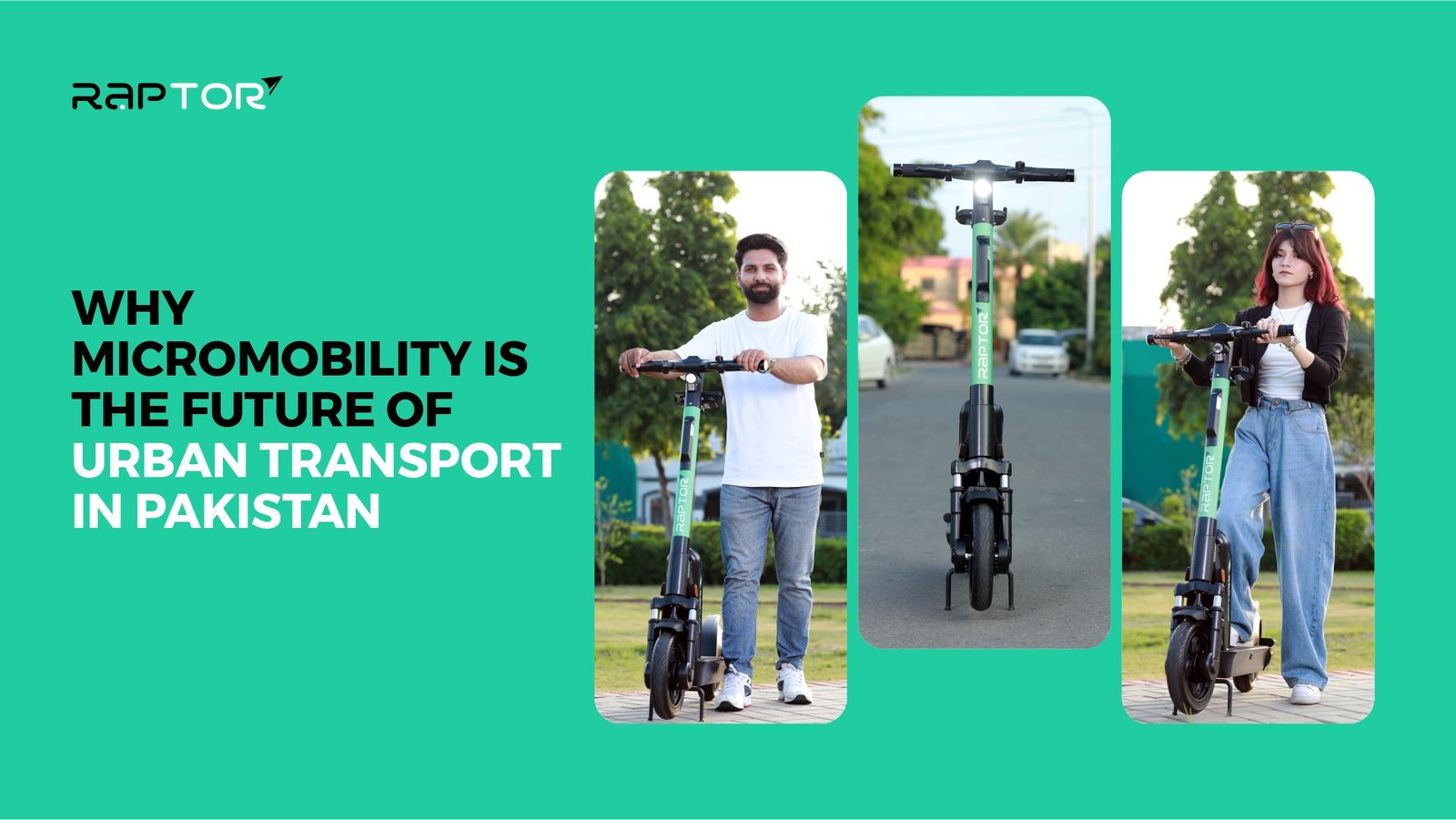
In Pakistan, micromobility is quickly becoming a game-changing answer to the country’s transportation problems. The idea of electric mobility in Pakistan has evolved from a sci-fi fantasy to a real-world requirement with the advent of e-scooters and e-bikes, as well as creative businesses like Ride Raptor Micromobility. Discussions about how micromobility in Pakistan might close the gaps in urban mobility, lower pollution, and alleviate traffic congestion have been sparked by the increased need for accessible, affordable, and sustainable commuting options.
Pakistani cities are supported by policies like the NEVP and developments in charging station infrastructure, so the adoption of micromobility is picking up pace. However, the road ahead is also long and complicated. From micromobility challenges in Pakistan to battery technology, a plethora of issues are determining the velocity and expanse of growth.
This blog explores the landscape of micromobility in Pakistan, focusing specifically on micromobility of Pakistan, the opportunities, challenges, and the possible future of last-mile mobility in Pakistan.
The Growth of Micromobility in Pakistan
Unlike other markets, Pakistan is still coming to terms with the idea of micromobility. In the past, urban transport was predominantly done through the use of motorcycles, rickshaws, buses, and personal cars. This was, however, before the advent of other alternatives to urban transport that were unhindered by traffic jams, which were, economically and environmentally, friendlier.
Pakistani e-scooters and e-bikes have taken the lead in providing small-form, green, and inexpensive urban transport.
Rideraptor Micromobility and other platforms are trailblazers in micromobility Pakistan, expanding the concept with rental systems and eliminating the necessity of personal vehicles.
Pakistan e-mobility still addresses local transportation problems while keeping in line with international concerns.
Ride Raptor Micromobility: A Pioneer in the Sector
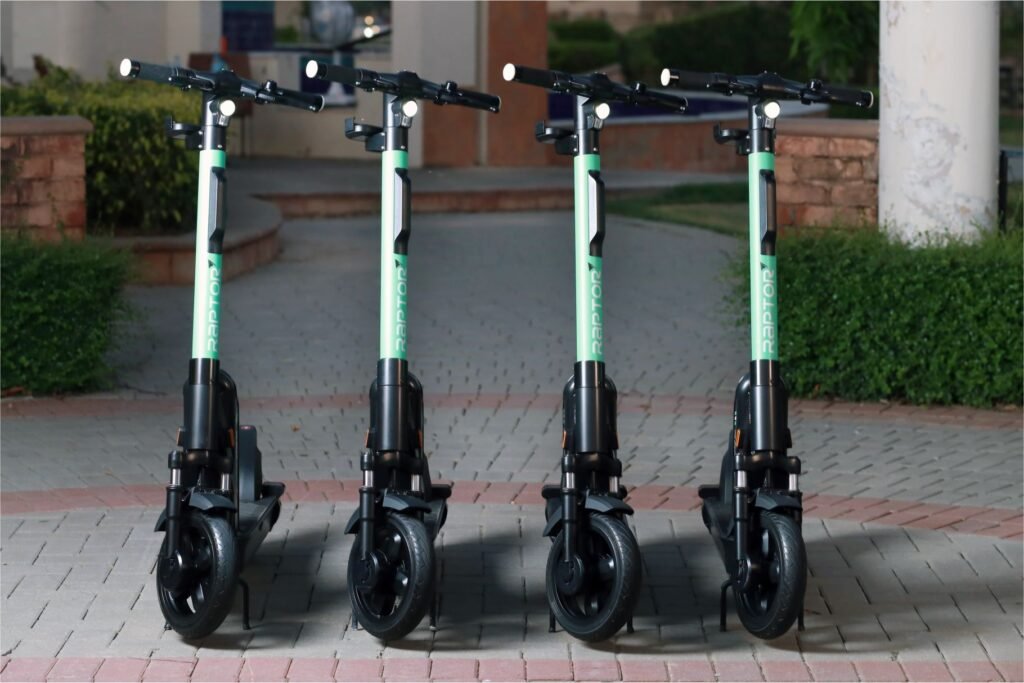
Ride Raptor Micromobility is one of the more exciting companies in the sector. The company is not only bringing e-scooters to Pakistan but is also building the underlying electric mobility ecosystem in the country.
Some of the notable projects undertaken by the company include:
In the big cities, launching bike-sharing Pakistan and scooter-sharing Pakistan schemes.
Running proactive educational campaigns on the pros of EVs in Pakistan.
Collaboration with local authorities to provide last-mile mobility in Pakistan and connect it with the public transport system.
Ride Raptor Micromobility is showing that micromobility in Pakistan is not only possible, but also a viable, economical, and user-friendly approach to urban problems.
Micromobility Opportunities in Pakistan
Micromobility opportunities in Pakistan have not been fully realized. The following reasons might help:
1. Increasing Availability of Transit Systems
Micromobility opportunities in Pakistan have not been fully realized.
2. The country’s Rapidly Growing Population
Micromobility in Pakistan has easily accessible and convenient methods of transportation.
3. The Government’s E-mobility Incentive Scheme
The Pakistan NEVP grants various local and imported e-bike and e-scooter Pakistan electric vehicle incentives, which in turn stimulates EV adoption in Pakistan.
4. The Increasing Recognition of The Issue
The private and public sectors in Pakistan are in a position to financially profit through electric transport Pakistan and also counterbalance the ecological destruction.
5. Affordability and accessibility
E-scooters and e-bikes in Pakistan are less expensive than vehicles or motorbikes, making them more accessible to middle- and lower-income people.
6. Shared Mobility Ecosystems.
The rise of shared micromobility. Pakistan ensures that even those who cannot afford ownership can benefit from bike-sharing and scooter-sharing services.
Challenges for Micromobility in Pakistan
Despite the promise, Pakistan faces considerable micromobility hurdles.
1. Limited charging infrastructure.
Charging infrastructure development in Pakistan is still in its early phases, creating a hurdle to mainstream electric mobility in the country.
2. Battery Technology Concerns
The reliance on foreign batteries increases costs and creates sustainability concerns. Improved battery technology is critical for affordable e-bikes and e-scooters in Pakistan.
3. Regulatory Obstacles
Although the Electric Vehicle Policy Pakistan (NEVP) establishes a platform, consistent implementation and enforcement are lacking.
4. Cultural and behavioral barriers.
Many commuters in Pakistan are unfamiliar with micromobility, hence they are hesitant to use Ride Raptor Micromobility and similar platforms.
5. Safety & Infrastructure
Urban planning has failed to include designated lanes for e-scooters and e-bikes in Pakistan, posing a safety concern to riders.
Micromobility and Last Mile Connectivity
One of micromobility’s primary strengths in Pakistan is its ability to solve last-mile mobility challenges. Commuters frequently struggle to travel the distance between public transportation stops and their final destinations. E-scooters and e-bikes Pakistan offer an effective, rapid, and environmentally sustainable bridge. Companies like as Ride Raptor Micromobility are portraying themselves as enablers of urban mobility in Pakistan, integrating their solutions into larger public transportation networks.
The Importance of Technology in Promoting Micromobility
Micromobility in Pakistan relies heavily on technology. Rentals are made easier with mobile apps for bike and scooter sharing in Pakistan. GPS tracking promotes safety and accountability. Advances in battery technology have increased ride range, making electric mobility in Pakistan more viable.
Digital payment mechanisms are also helping to accelerate the development of shared micromobility in Pakistan, attracting to younger, more tech-savvy consumers.
Environmental Impacts of Micromobility
The environmental advantages of micromobility in Pakistan cannot be emphasized. The switch from fossil-fuel cars to e-scooters and e-bikes in Pakistan directly cuts pollution. Ride Raptor Micromobility supports the introduction of electric mobility in Pakistan, which helps to cleaner cities and aligns with national sustainability goals.
FAQs about micromobility in Pakistan
Q1: What is micromobility in Pakistan?
Micromobility in Pakistan refers to small, lightweight electric vehicles like e-scooters and e-bikes that are meant for short travels within cities.
Q2: What is Ride Raptor Micromobility?
Rideraptor Micromobility is a major firm in Pakistan that promotes electric mobility by providing shared micromobility solutions such as scooter-sharing.
Q3. How does the Electric Vehicle Policy of Pakistan (NEVP) promote micromobility?
To stimulate EV adoption, Pakistan’s Electric Vehicle Policy lowers import taxes, provides incentives for local production, and promotes investment in charging infrastructure.
Q4. What are the primary micromobility problems Pakistan faces?
Pakistan faces several major hurdles, including limited charging infrastructure, a lack of battery technology, lax regulatory compliance, and insufficient awareness.
Q5. What micromobility opportunities may Pakistan seize?
Opportunities include affordability, environmental benefits, integration with urban mobility in Pakistan, and increased demand for last-mile mobility.
Conclusion
The future of micromobility in Pakistan looks promising. Ride Raptor Micromobility and other companies are pioneering solutions such as e-scooters, e-bikes, and shared micromobility in Pakistan. With supportive frameworks such as the Electric Vehicle Policy Pakistan (NEVP) and investments in charging infrastructure, the route to mainstream adoption of electric mobility in Pakistan appears to be clear.
However, issues like as inadequate battery technology, cultural reluctance, and infrastructure constraints must be solved. If approached effectively, micromobility potential in Pakistan will reshape urban mobility, making cities cleaner, greener, and more accessible.
In summary, micromobility in Pakistan is about more than just convenience; it is about creating a sustainable future. Rideraptor Micromobility and other space innovators may help make the idea of efficient last-mile mobility in Pakistan a reality by implementing the correct regulations, technology, and raising awareness.